Tritium Winery
Hospitality
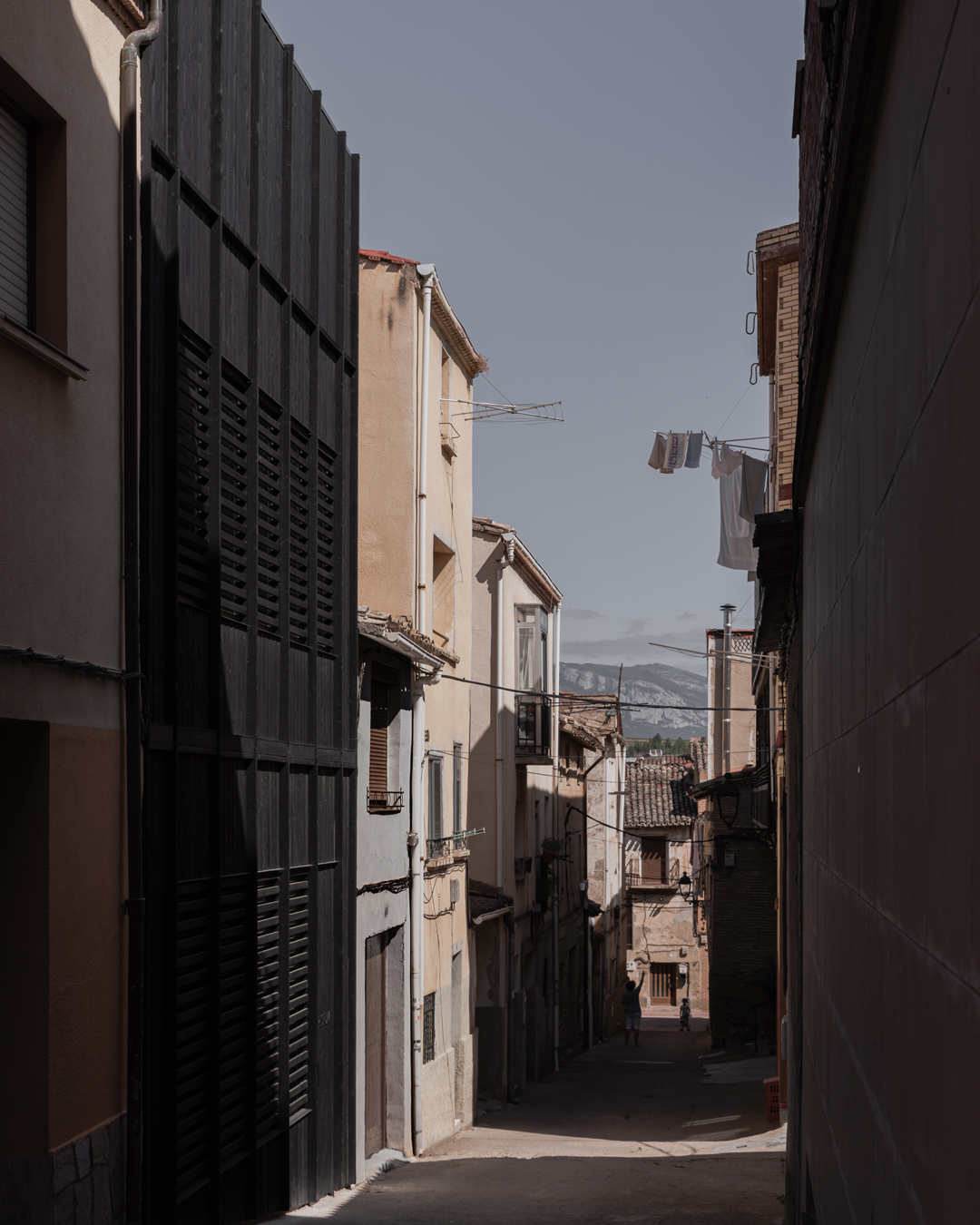
Like the wine they produce, the design of Tritium Winery in La Rioja reads as a story of contrasts: new versus old, complex versus simple, light and darkness. Located in the historic center of Cenicero, the project combines the renovation of a pre-existing building with a newly constructed structure whose façade, executed in charred wood, evokes the shape of a barrel.
-
Location
Cenicero, La Rioja (Spain) -
Architect
-
Photography
-
Product
A story of contrasts: new versus old, light and darkness
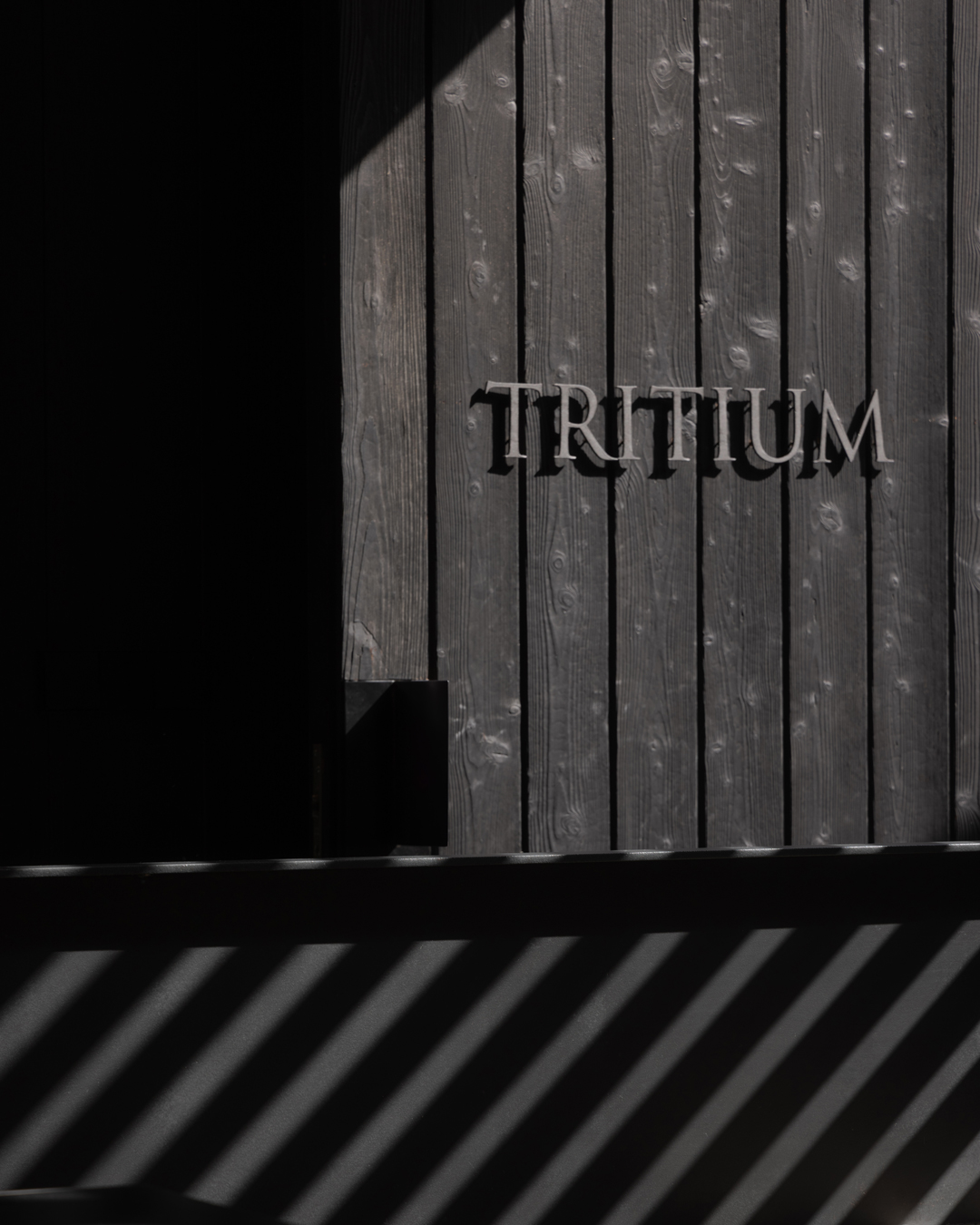
The new construction of Tritium Winery aimed to complement the original building, dating back to the 15th century, by restoring an underground cellar and adding a reception and multifunctional room that can serve as a dining area, tasting room, or training space. From the new volume unfolds a dark narrative in stained oak, black steel, and charred pine that not only highlights the original ashlar stone elements but also offers durability and contributes to the proper preservation of the wine.


The new cellar, 36 meters long and located 7 meters underground, comes to life through a set of doors made of smoked gray glass and metal structure, which, thanks to the magic of light, gradually reveals each section of this subterranean environment—barrel storage, tasting area, and bottle cemetery.
The new architecture also rationalizes the space, creating a more intuitive circulation. The journey begins with the reception and access to the new cellar, leading to a transition area that accompanies the production and logistics room, where the pressed grape tanks—made of steel, concrete, and ceramic—can be glimpsed through a glass and lattice enclosure. The corridor opens to a double-height space with access to the old cellar, flanked by the staircase leading to the first floor. The wooden handrail becomes a support bar for the tasting area, followed by an office, kitchen, bathrooms, and the multifunctional room. Returning to the ground floor, the journey ends at what was formerly the main entrance, now transformed into a sales and exit point.


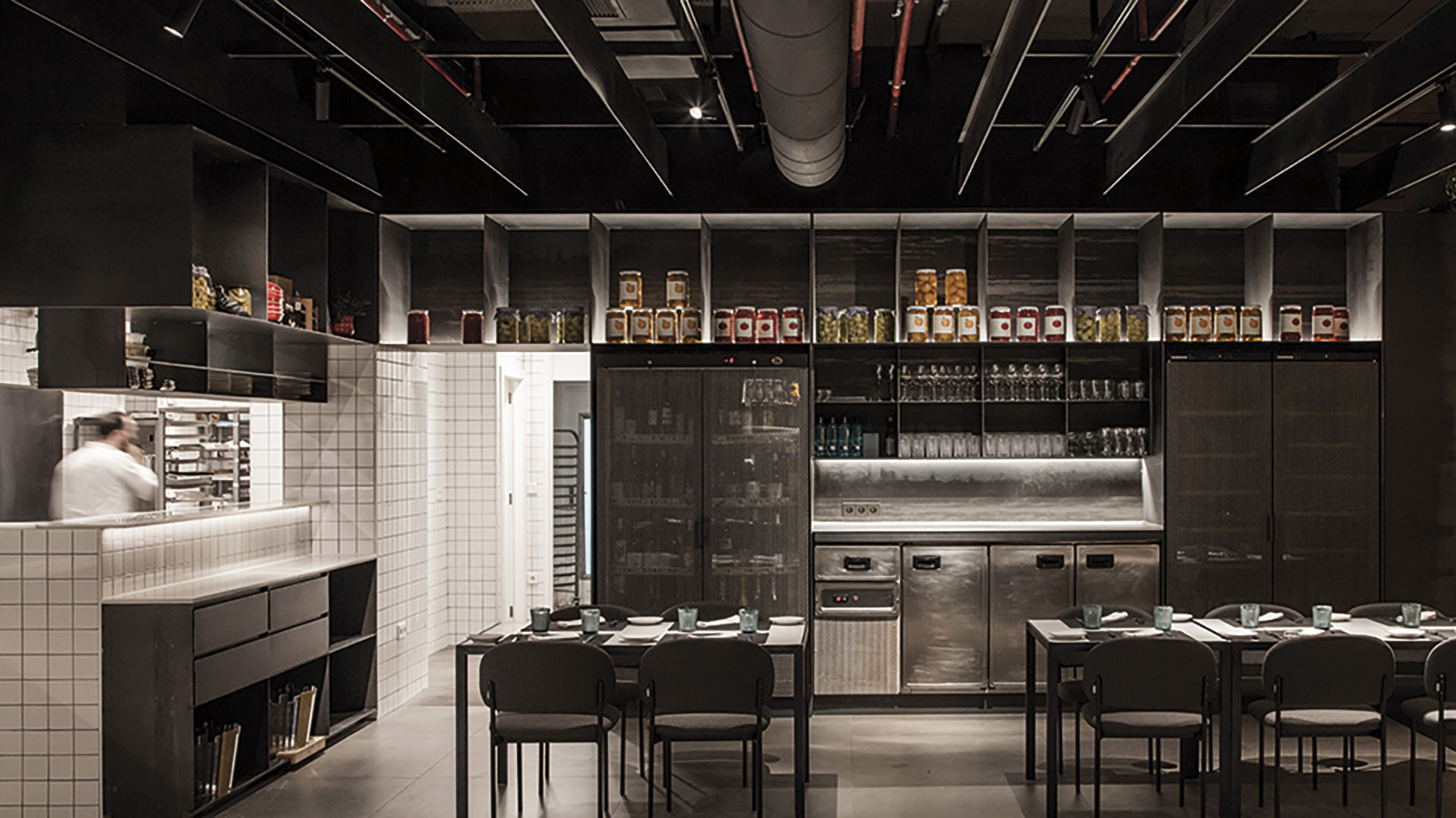
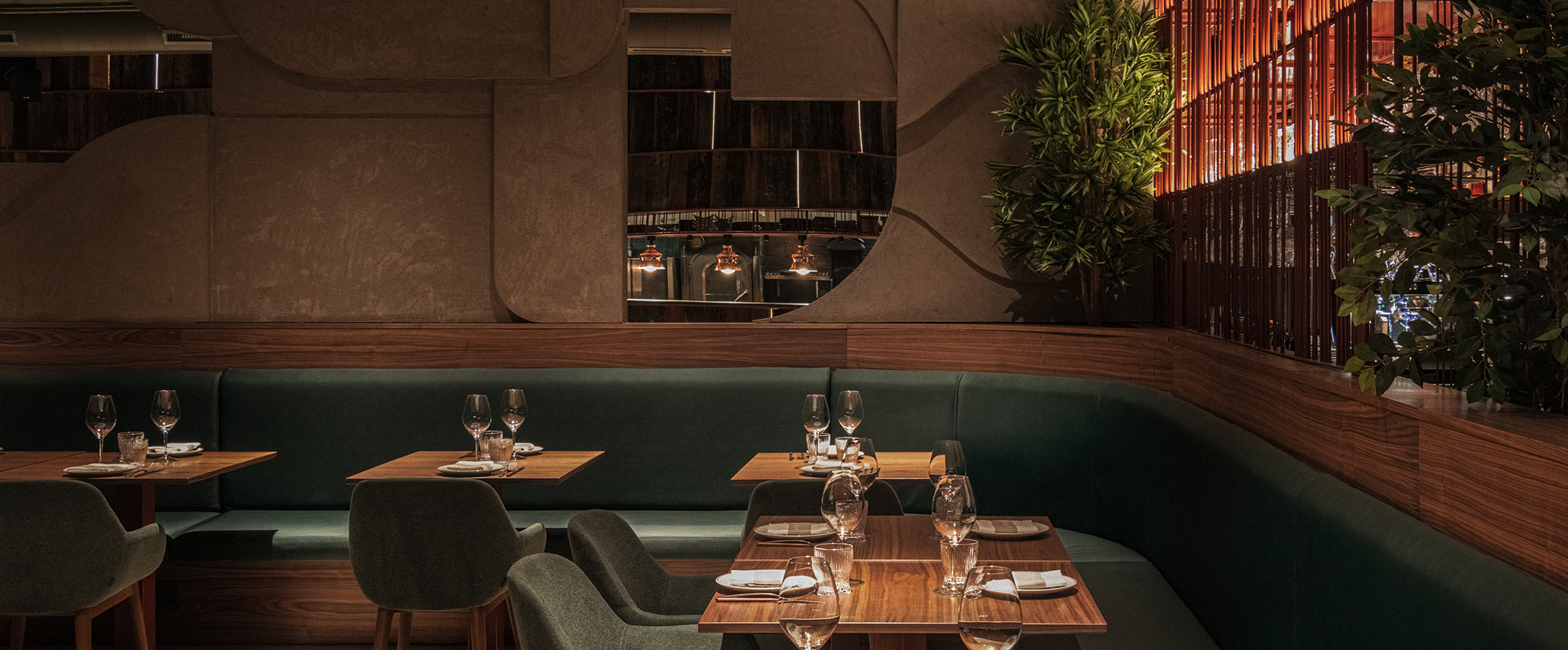
Carefully designed lighting accompanies each space, creating specific atmospheres that reflect the function of each environment: warm and welcoming light in the tasting area, focused lighting highlighting the texture of wood and stone, and more subdued lighting in the underground cellar that enhances the sense of mystery and depth, generating unique sensory experiences throughout the route.


Related products


Share your projects that include the Arkoslight collection. Let's show them to the world
Related projects